
Blog
Bajra (Pearl Millet) Benefits: The Ancient Grain Your Body Needs Right Now

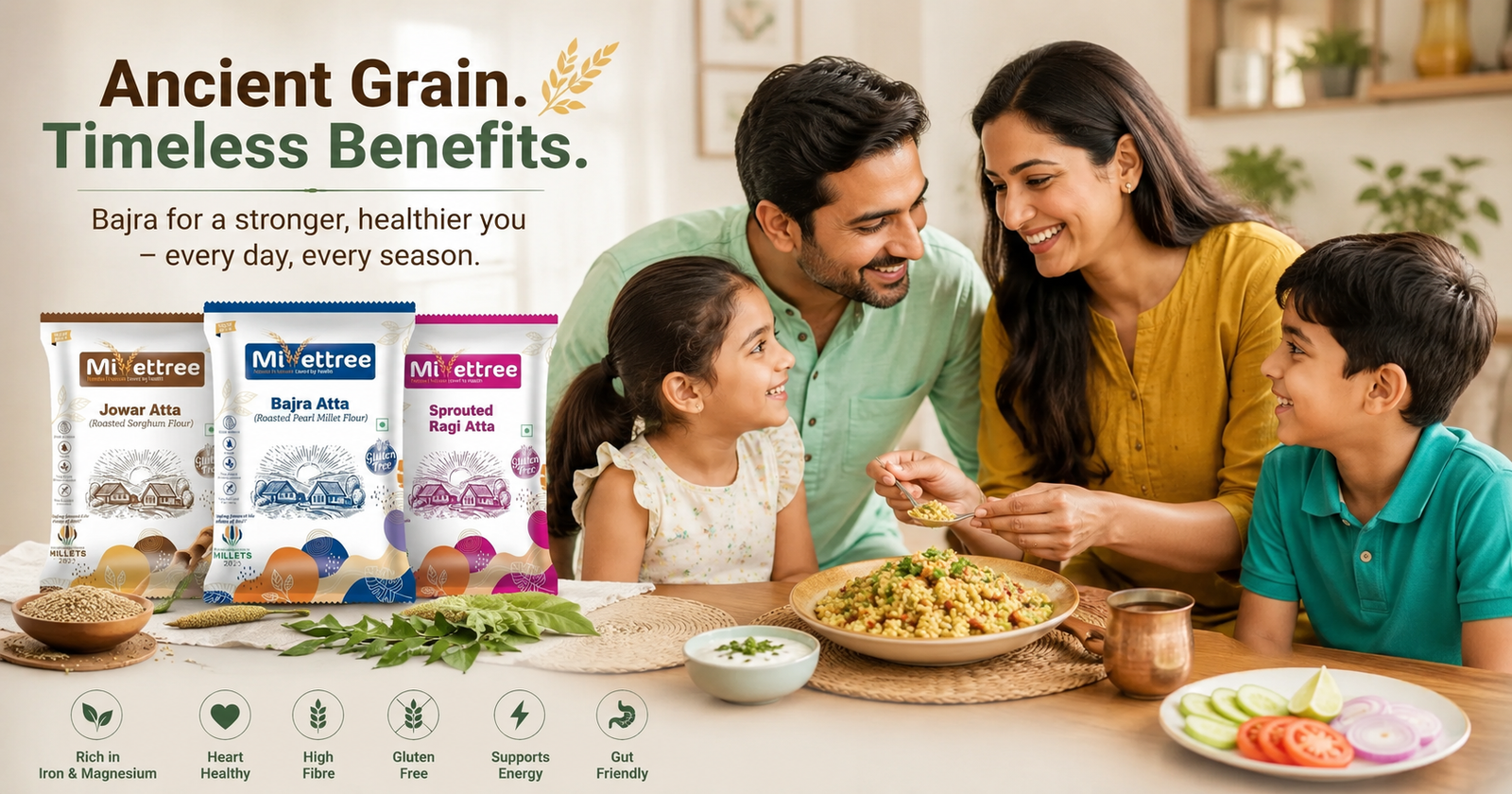
Is Bajra Only for Winters?
The short answer: no but context matters.
The association between bajra and winter comes from Ayurvedic and regional cooking traditions. Bajra is considered ushna veerya (hot in nature), meaning it generates warmth in the body. This is why communities in Rajasthan, Gujarat, and Punjab historically leaned on it during cold months; it kept them warm, energised, and nourished through harsh winters.
However, this does not mean bajra is unsafe or unsuitable in summer. The key is how much you eat and how you pair it.
In warmer months, bajra is best consumed in moderate portions and paired with cooling accompaniments raita, buttermilk (chaas), fresh cucumber, or mint chutney. Soaking broken bajra before cooking also reduces its heating effect on the body. When approached this way, bajra is completely safe and nutritionally valuable year-round for most healthy adults.
That said, individuals with very high pitta constitution or those prone to heat-related conditions (acidity, rashes, excessive sweating) may prefer to reduce bajra consumption during peak summer and increase their intake of jowar or ragi instead — both of which are considered more neutral in nature. Consulting a nutritionist or Ayurvedic practitioner can help personalise this further.
Nutritional Profile of Bajra (per 100 g, raw)
Bajra packs approximately 360 calories, 11 g of protein, 8.5 g of fibre, 8 mg of iron, 77 mg of magnesium, and 195 mg of phosphorus. It is also an excellent source of B vitamins including niacin and folate, as well as zinc and potassium.
- Exceptional Iron Content for Energy and Anaemia Prevention
Bajra is one of the best grain sources of iron, with approximately 8 mg per 100 gram comparable to red meat in absolute terms. Regular consumption helps maintain haemoglobin levels, boosts energy, and reduces the fatigue and breathlessness associated with iron deficiency anemia.
- Supports Heart Health
Bajra is rich in magnesium, which plays a key role in maintaining a healthy heart rhythm and blood pressure. Its high fibre content helps lower LDL (bad) cholesterol. The combination of these nutrients makes bajra a genuinely heart-protective food, particularly for those with a family history of cardiovascular disease.
- Naturally Manages Blood Pressure
Potassium and magnesium in bajra work together to relax blood vessel walls and reduce arterial tension. Including bajra in a balanced diet may help support healthy blood pressure levels, particularly for those in the pre-hypertensive range.
- Slow-Digesting for Sustained Energy
Bajra’s complex carbohydrates break down gradually, providing steady energy throughout the day rather than quick spikes followed by crashes. This makes bajra khichdi or bajra roti an excellent breakfast or lunch option for workers, students, and athletes who need consistent mental and physical energy.
- Supports Gut Health with Prebiotic Fibre
Bajra contains both soluble and insoluble fibre. The insoluble fibre adds bulk to stools and prevents constipation, while the soluble fibre feeds beneficial gut bacteria. A healthy microbiome is increasingly linked to immunity, mood regulation, and metabolic health.
- Gluten-Free and Hypoallergenic
Like all millets, bajra is completely gluten-free. It is also considered one of the least allergenic grains, making it suitable for people managing coeliac disease, wheat allergy, or irritable bowel syndrome.
- Supports Weight Management
Bajra’s fiber and protein content promote satiety. You feel full for longer after a bajra meal compared to a white rice or refined flour meal. This naturally reduces overeating without requiring calorie counting or restrictive diets.
- Rich in Antioxidants
Bajra contains phenolic compounds including ferulic acid and quercetin, which have anti-inflammatory and antioxidant properties. These help neutralise free radicals and may reduce the risk of chronic diseases.
A Word on Moderation, Year-Round
Bajra is nourishing, but like any food, it performs best when consumed in the right quantities. Overeating bajra particularly in one sitting or across multiple meals in a day — can lead to digestive heaviness, excess body heat in sensitive individuals, and in some cases, bloating or constipation if water intake is insufficient.
The recommended approach is 1–2 bajra rotis per meal, or one serving of khichdi, paired with adequate water and cooling sides. Rotating bajra with other millets like ragi and jowar throughout the week ensures your body gets a broader range of nutrients without overdoing any single grain.
This principle of moderate, consistent consumption is exactly what Millettree’s Instant Bajra Khichdi is designed for. Each pack is portioned for one balanced serving — enough to deliver meaningful nutrition without excess. It is pre-seasoned with a blend of digestion-friendly spices, making it suitable for any season, not just winter.
Easy Ways to Include Bajra Daily
The most traditional preparation is bajra roti. Simply mix Millettree Roasted Bajra Flour with warm water, knead into a soft dough, and cook on a tawa. Serve with ghee, dal, or vegetables, and add a side of raita or buttermilk in summer to balance the grain’s warming nature.
For a quick, no-fuss option, Millettree’s Instant Bajra Khichdi delivers the full nutritional profile of bajra in a complete, flavourful meal ready in minutes with perfectly balanced portions and ingredients designed for easy digestion in any season.
Conclusion
Bajra is not a seasonal grain to be put away when the temperatures rise, it is a year-round nutritional powerhouse that simply requires a little seasonal awareness in how it is prepared and portioned. From its extraordinary iron content and heart-protective magnesium to its prebiotic fibre and slow-releasing energy, bajra delivers benefits that no other commonly eaten grain in India can match across the board. Eat it through the year, eat it in moderation, pair it intelligently with cooling foods in summer, and rotate it with other millets for a complete nutritional picture. This is not just ancient wisdom, it is practical, evidence-backed dietary advice for modern Indian households. Bajra deserves a permanent place on your plate, not just in your winter pantry.
Internal Links: Roasted Bajra Flour | Instant Bajra Khichdi | Heart & Wellness Combo