
Blog
Ragi Health Benefits: 10 Reasons to Add Finger Millet to Your Daily Diet

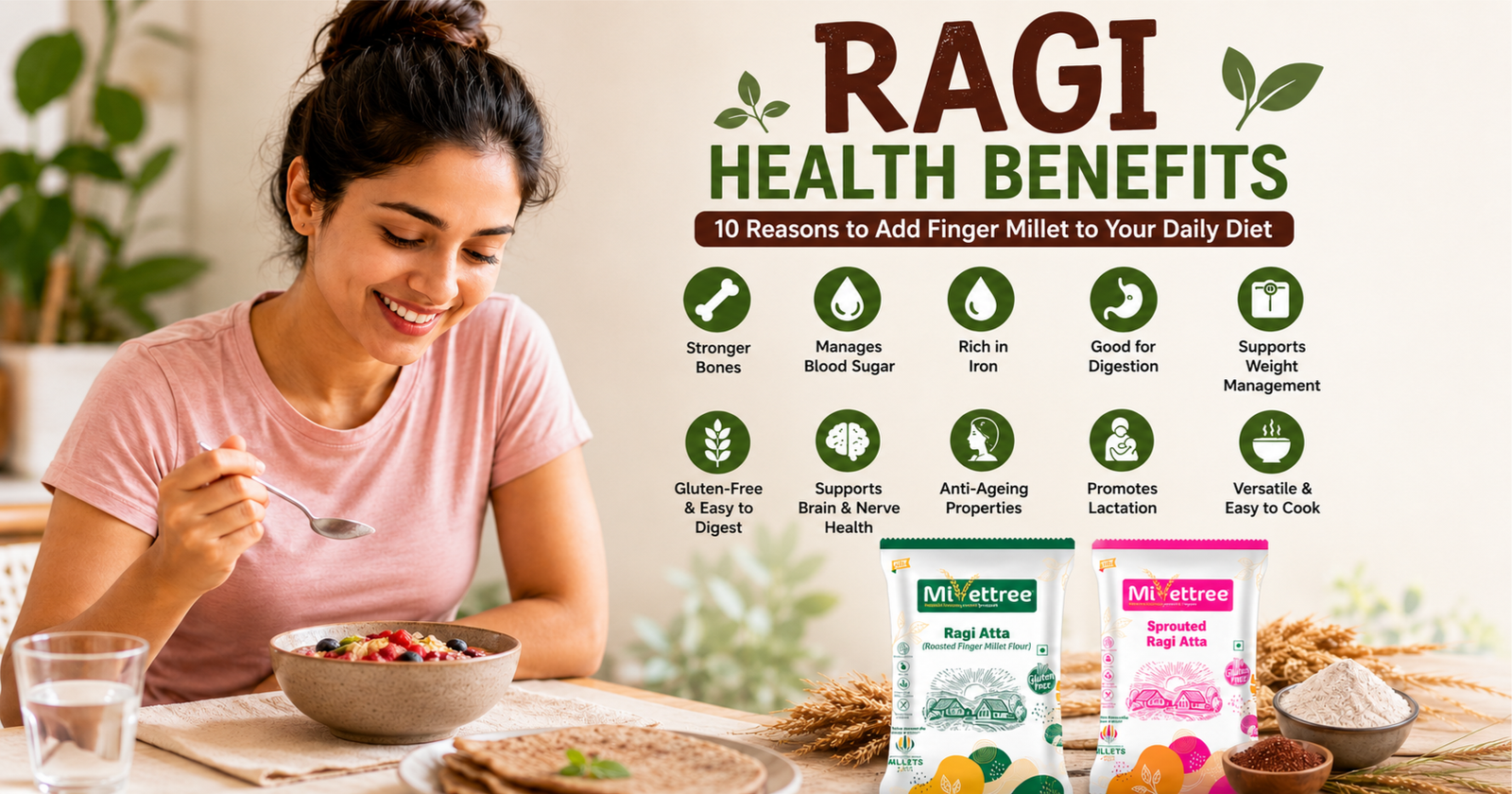
1. Exceptional Calcium for Bone Health
Ragi is one of the richest plant-based sources of calcium, containing roughly 344 mg per 100 g — significantly more than milk on a per-calorie basis. For growing children, lactose-intolerant individuals, and post-menopausal women, incorporating ragi regularly helps maintain bone density and reduces the risk of osteoporosis.
2. Naturally Manages Blood Sugar Levels
Ragi has a low glycaemic index (GI), meaning it releases glucose slowly into the bloodstream. Its high polyphenol and dietary fibre content further slows digestion and prevents sudden sugar spikes. Studies suggest that regular consumption of ragi may help people with Type 2 diabetes manage their condition more effectively alongside a balanced diet.
3. Rich in Iron — A Natural Solution for Anaemia
Iron deficiency remains one of the most common nutritional problems in India, particularly among women and children. Ragi provides a notable amount of non-haem iron. When consumed as sprouted ragi, the bioavailability of iron increases significantly, making it an excellent dietary strategy to combat anaemia.
4. High in Dietary Fibre for Digestive Wellness
The fibre content in ragi supports a healthy gut by promoting regular bowel movements, reducing constipation, and feeding beneficial gut bacteria. A fibre-rich diet is also linked to lower risks of colorectal conditions and improved overall metabolic health.
5. Supports Healthy Weight Management
Because ragi digests slowly and keeps you feeling full for longer, it is an excellent grain for those trying to manage or lose weight. Replacing refined wheat flour with ragi flour in your rotis, pancakes, or porridge can reduce overall calorie intake without sacrificing satisfaction.
6. Gluten-Free and Easy to Digest
Ragi is naturally gluten-free, making it a safe and nutritious option for people with coeliac disease or gluten sensitivity. It is also gentle enough for infants (from about 6 months), elderly individuals, and anyone with a sensitive digestive system.
7. Supports Brain and Nervous System Health
Ragi contains the amino acid tryptophan, a precursor to serotonin — the “feel-good” neurotransmitter. Regular consumption may support better mood, reduced anxiety, and improved sleep quality. Its B-vitamin content also supports overall nervous system function.
8. Anti-Ageing Properties
Rich in polyphenols and antioxidants, ragi helps neutralise free radicals that accelerate cellular ageing. Regular intake may contribute to healthier skin, reduced inflammation, and a lower risk of chronic diseases associated with oxidative stress.
9. Promotes Healthy Lactation
In many South and North Indian traditions, ragi porridge has long been given to new mothers to boost milk production. The combination of calcium, iron, and amino acids makes ragi particularly supportive during the postpartum period.
10. Versatile and Easy to Cook
One of ragi’s greatest strengths is its versatility. Use ragi flour for rotis, dosas, idlis, porridge, cookies, cakes, malt drinks, and soups. Millettree’s roasted and sprouted ragi atta is ready to use — just swap it in for a portion of your regular flour.
How to Get Started with Ragi
The simplest step is to replace 25–50% of your regular atta with Millettree Roasted Ragi Atta or Millettree Sprouted Ragi Atta. Sprouted ragi offers even higher nutrient bioavailability because the germination process breaks down anti-nutritional factors like phytic acid.
For a quick, no-cook option, try Millettree’s Instant Ragi South Indian Mix Soup or Instant Ragi Tomato Soup — wholesome ragi nutrition ready in under 2 minutes.
Is ragi good for weight loss?
Yes — and here’s exactly why it works. Ragi is high in dietary fibre and digests slowly, keeping you full for longer and reducing the urge to snack between meals. Unlike refined wheat flour, it doesn’t cause rapid blood sugar spikes that typically trigger hunger shortly after eating.
Practical tips for weight management:
- Replace 50% of your regular atta with Millettree Roasted Ragi Atta in rotis or pancakes
- Start your day with ragi porridge instead of processed cereals
- Pair with protein — dal, curd, or egg — to enhance satiety further
Ragi works best as a supportive tool for weight management when combined with a balanced diet and regular physical activity.
Can diabetics eat ragi daily?
Yes — ragi is one of the best grains for diabetics, when consumed mindfully. Its low GI means glucose is released gradually rather than in sudden spikes. The polyphenols and fibre in ragi further slow digestion and may improve insulin sensitivity over time.
Guidelines for diabetics:
- Choose sprouted ragi where possible — germination lowers the GI even further
- Avoid pairing with high-sugar accompaniments such as excess jaggery or sweetened chutneys
- Keep portions measured — around 30–40 g of ragi flour per meal is a common recommendation
- Always consult your doctor or dietitian for personalised guidance
How much ragi should I eat per day?
A general guideline for healthy adults is 30–80 g of ragi flour per day — roughly 1 to 2 rotis or a bowl of porridge.
| Goal | Suggested Daily Amount |
| General health | 30–50 g |
| Bone health / lactating mothers | 50–80 g |
| Diabetes / weight management | 30–40 g per meal, 1–2 times a day |
| Children (from 6 months) | Small amounts in porridge form |
Keep in mind that ragi is calorie-dense (approximately 336 kcal per 100 g). It works best as a partial substitute for your regular atta, not a full replacement.
Is sprouted ragi better than regular ragi?
Yes — sprouted ragi is nutritionally superior in almost every measurable way. The germination process triggers enzymatic activity that breaks down phytic acid and other anti-nutritional factors, which would otherwise block mineral absorption.
What sprouting improves:
- Iron absorption — significantly more bioavailable
- Calcium and zinc — easier for the body to utilise
- Protein digestibility — enzymes partially pre-digest the proteins
- Glycaemic index — glucose is released even more slowly
- Antioxidant content — increases naturally during germination
Millettree Sprouted Ragi Atta uses carefully germinated grain so you get all these benefits with zero extra effort — simply use it wherever you would use regular ragi flour.
Internal Links: Sprouted Ragi Atta | Roasted Ragi Atta | Brain & Growth Combo