
Blog
Bajra Khichdi: The Ultimate Comfort Food That Is Also a Nutritional Powerhouse

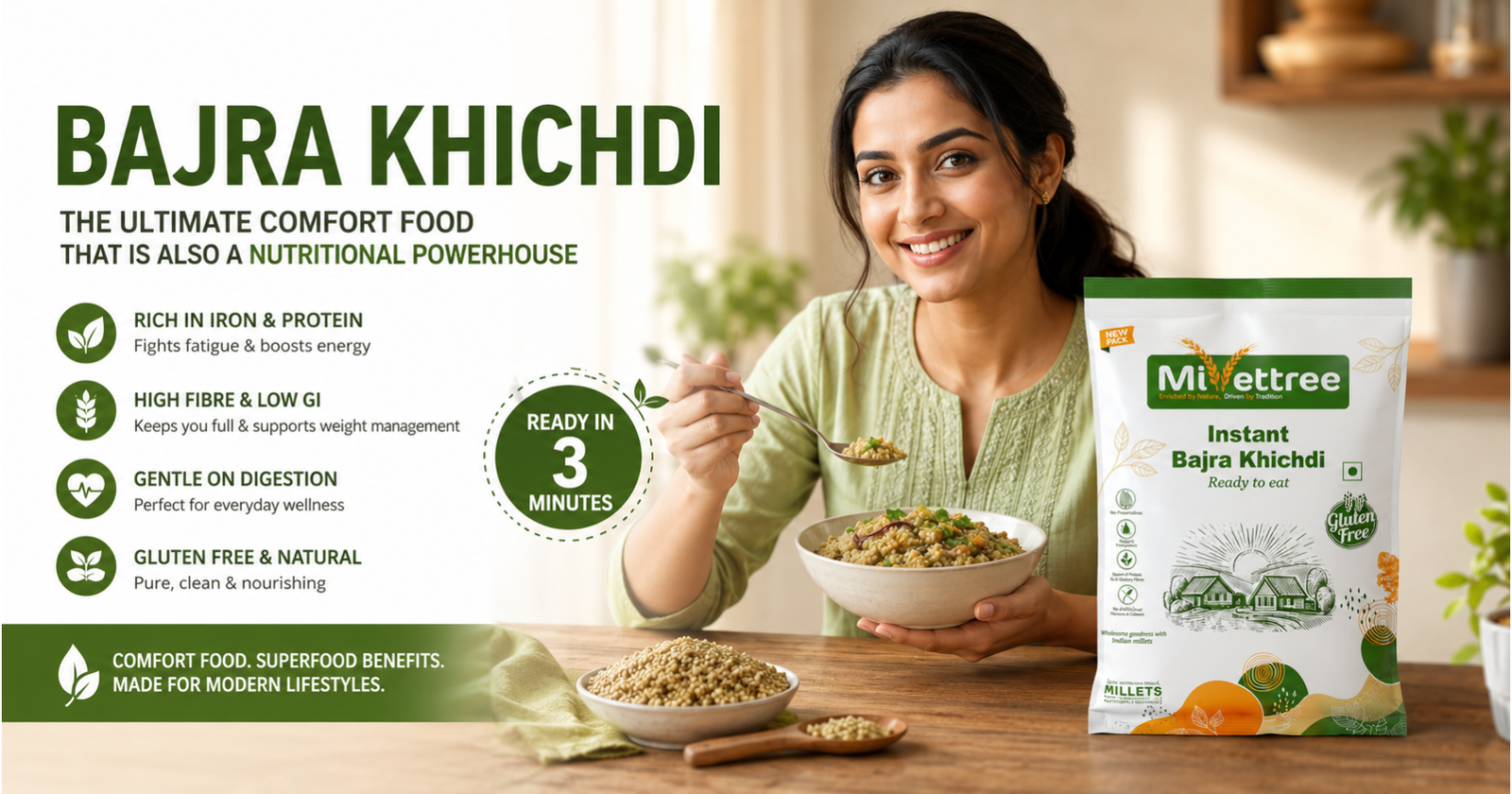
What is Bajra Khichdi?
Bajra khichdi is a one-pot preparation made by cooking pearl millet with split lentils, most traditionally moong dal, tempered with ghee, cumin, and warming spices. The result is a thick, comforting porridge-like dish with a deeply satisfying texture and a flavour that is simultaneously mild and complex. It is eaten across Rajasthan and Gujarat as a winter staple and is now gaining national popularity as a year-round health food among nutritionists, fitness communities, and health-conscious families across India.
The appeal is easy to understand. It is one of those rare meals that manages to be simultaneously comforting and medicinal, traditional and relevant, humble in its ingredients and extraordinary in its nutritional profile.
Bajra Khichdi vs Regular Rice Khichdi
The most useful place to begin understanding what bajra khichdi offers is in a direct comparison with the rice khichdi that most Indian households already know and make regularly. Both are one-pot meals. Both are easy to prepare and gentle on the stomach. Both use moong dal. The grain is the only real difference, and yet that difference is nutritionally profound.
| Nutrient (per serving) | Rice Khichdi | Bajra Khichdi |
| Glycaemic Index | High (65 to 70) | Low to Medium (50 to 55) |
| Fibre | Approximately 2 g | Approximately 5 to 6 g |
| Protein | Approximately 7 g | Approximately 10 to 11 g |
| Iron | Approximately 1.5 mg | Approximately 5 to 6 mg |
| Calcium | Approximately 20 mg | Approximately 45 to 50 mg |
| Magnesium | Low | High |
| Satiety duration | 2 to 3 hours | 4 to 5 hours |
| Post-meal insulin response | High | Moderate |
| Gluten-Free | Yes | Yes |
Every single nutritional parameter that matters for sustained health, blood sugar stability, iron intake, protein quality, fibre, and satiety, favours bajra khichdi over rice khichdi. The glycaemic index difference alone is meaningful enough to make bajra khichdi a significantly better choice for diabetics, pre-diabetics, and anyone managing weight. The iron difference is particularly significant for women, children, and the elderly, for whom iron deficiency is among the most common nutritional concerns in India.
And yet bajra khichdi requires no adjustment to the fundamental eating habit of enjoying a warm, soft, one-pot khichdi. The cooking method is identical. The spice profile is familiar. The comfort is the same. The only change is the grain, and that change delivers a substantially more nourishing meal with every serving.
Why Bajra Khichdi Is Exceptionally Nutritious
Complete protein: Neither bajra nor lentils alone contain all nine essential amino acids in adequate quantities. But together, through a principle called protein complementarity, they combine to form a complete protein profile that closely rivals animal protein in its usefulness to the body. The amino acids that bajra lacks, moong dal provides, and vice versa. For vegetarians and vegans, bajra khichdi is one of the most reliable and genuinely complete protein meals available in the Indian culinary tradition.
Iron and folate powerhouse: Bajra contains approximately 8 mg of iron per 100 g raw, which is extraordinary for a plant food. Combined with moong dal’s meaningful folate content, bajra khichdi becomes particularly valuable for pregnant women who need both iron to prevent anaemia and folate for healthy foetal neural development, for growing children whose iron requirements are high relative to body weight, and for anyone managing iron deficiency or chronic fatigue.
Magnesium and heart health: Bajra is one of the richest grain sources of magnesium, a mineral that plays a critical role in maintaining healthy heart rhythm, regulating blood pressure, supporting muscle function, and managing stress hormones. The combination of bajra’s magnesium with moong dal’s additional mineral content makes bajra khichdi a genuinely heart-protective meal that supports cardiovascular health over the long term.
Easy on digestion: Unlike many high-fibre foods that can cause gas and bloating, bajra khichdi, particularly when cooked to a soft, well-done consistency, is remarkably gentle on the digestive tract. The cooking process breaks down the grain and lentils thoroughly, making the nutrients accessible and the meal easy to process even for sensitive stomachs. It is one of the first solid foods recommended after illness, surgery, or significant digestive upset, and it is equally appropriate as a regular daily meal for people with healthy digestion.
Sustained energy without blood sugar spikes: The combination of bajra’s low-GI starch and the protein from moong dal works together to slow glucose absorption significantly after a meal of bajra khichdi. Blood sugar rises gently and remains stable for hours rather than spiking and crashing. This makes bajra khichdi one of the most recommended meal options for people with Type 2 diabetes, insulin resistance, or anyone who has noticed the afternoon energy slump that typically follows a rice-heavy lunch.
Traditional Bajra Khichdi Recipe (Serves 2)
Ingredients:
1 cup bajra, broken pearl millet Half cup moong dal, split green gram, washed 1 tablespoon ghee 1 teaspoon cumin seeds 1 small onion, finely chopped 1 teaspoon grated ginger Salt, turmeric, and black pepper to taste 3.5 cups water
Method: Heat ghee in a pressure cooker over medium heat. Add cumin seeds and allow them to splutter fully, about 30 seconds. Add the finely chopped onion and grated ginger and sauté until the onion turns golden, approximately 3 to 4 minutes. Add the bajra, washed moong dal, water, and spices. Stir to combine, close the pressure cooker, and cook for 3 to 4 whistles on medium heat. Allow the pressure to release naturally before opening. Stir well, check the consistency, and add hot water if you prefer a softer, more porridge-like texture. Serve hot with a drizzle of fresh ghee, a squeeze of lemon juice, and a generous scattering of fresh coriander.
This recipe can be varied endlessly. Add a handful of spinach or fenugreek leaves during cooking for additional iron and vitamins. Include diced carrots or peas for extra fibre and colour. Add a pinch of hing (asafoetida) to the tempering for improved digestibility. The base recipe is reliable and forgiving, and the variations are limited only by what is available in your kitchen on a given day.
The Traditional Challenge of Cooking Bajra from Scratch
As deeply rewarding as traditional bajra khichdi is, it comes with a preparation reality that busy households need to plan around. Raw bajra grains are hard and dense. Before cooking, they ideally need to be soaked for a minimum of 4 to 6 hours, and preferably overnight, to soften the grain sufficiently for pressure cooking. Without soaking, the texture of the cooked bajra can be uneven, with some grains remaining coarse while others overcook.
After soaking comes the pressure cooking itself, which typically requires 3 to 4 whistles followed by a natural pressure release. Then the seasoning, consistency adjustment, and finishing. From beginning to end, making bajra khichdi from raw grain takes planning, active cooking time, and a level of preparation that simply does not fit into most weekday schedules, particularly for working professionals, new parents, students, or anyone managing a household with limited time.
This is the gap that Millettree’s Instant Bajra Khichdi is designed to fill completely.
The Instant Option
Millettree’s Instant Bajra Khichdi delivers the same grain, the same lentils, the same nutritional profile, and the same comforting flavour as traditionally prepared bajra khichdi, in a format that is ready in 3 minutes with only boiling water required.
The pre-processing, which includes the soaking, partial cooking, seasoning calibration, and ingredient balancing, has been done before the product reaches you. There is no soaking required, no pressure cooker to operate, no separate spice tempering, and no measuring of multiple raw ingredients. You add boiling water, stir, cover for 60 seconds, and your bajra khichdi is ready.
For working professionals who want a genuinely nourishing lunch without a long cooking process, for new mothers who need quick, iron-rich, easily digestible meals during the postpartum period, for students in hostels or paying guest accommodations with limited cooking facilities, for elderly individuals who want the nutrition of bajra khichdi without the physical effort of traditional preparation, and for anyone recovering from illness who needs easily digestible whole food on short notice, Millettree’s Instant Bajra Khichdi is not just a convenience. It is the most practical way to make bajra khichdi a consistent daily habit rather than an occasional effort.
Conclusion
Bajra khichdi is the rare meal that earns every superlative attached to it. It is more nutritious than rice khichdi in every measurable way, delivering more iron, more protein, more fibre, and a significantly lower glycaemic impact in the same comforting, familiar format. It is genuinely complete as a meal, providing complementary protein, heart-protective magnesium, digestive-friendly fibre, and slow-releasing energy in a single bowl. It is appropriate for every member of the family, from young children and pregnant women to the elderly and those managing chronic conditions. And it is rooted in centuries of Indian culinary wisdom that recognised its value long before modern nutrition science arrived to confirm it.
The only barrier that has ever stood between most Indian households and a daily habit of eating bajra khichdi has been the preparation effort involved in soaking raw bajra grain and cooking it from scratch. With Millettree’s Instant Bajra Khichdi, that barrier no longer exists. No soaking. No pressure cooker. No juggling of raw ingredients or planning the night before. The same deeply nourishing, iron-rich, protein-complete bajra khichdi that took an hour to prepare traditionally is now ready in 3 minutes, any day of the week, at any time you need it. That is the kind of practical solution that turns a healthy aspiration into a healthy reality, and there is no better place to start than with a grain that has been nourishing Indian families for thousands of years.
Internal Links: Instant Bajra Khichdi | Heart & Wellness Combo | Roasted Bajra Flour