
Blog
Millets for Weight Loss: The Science-Backed Guide for Indians

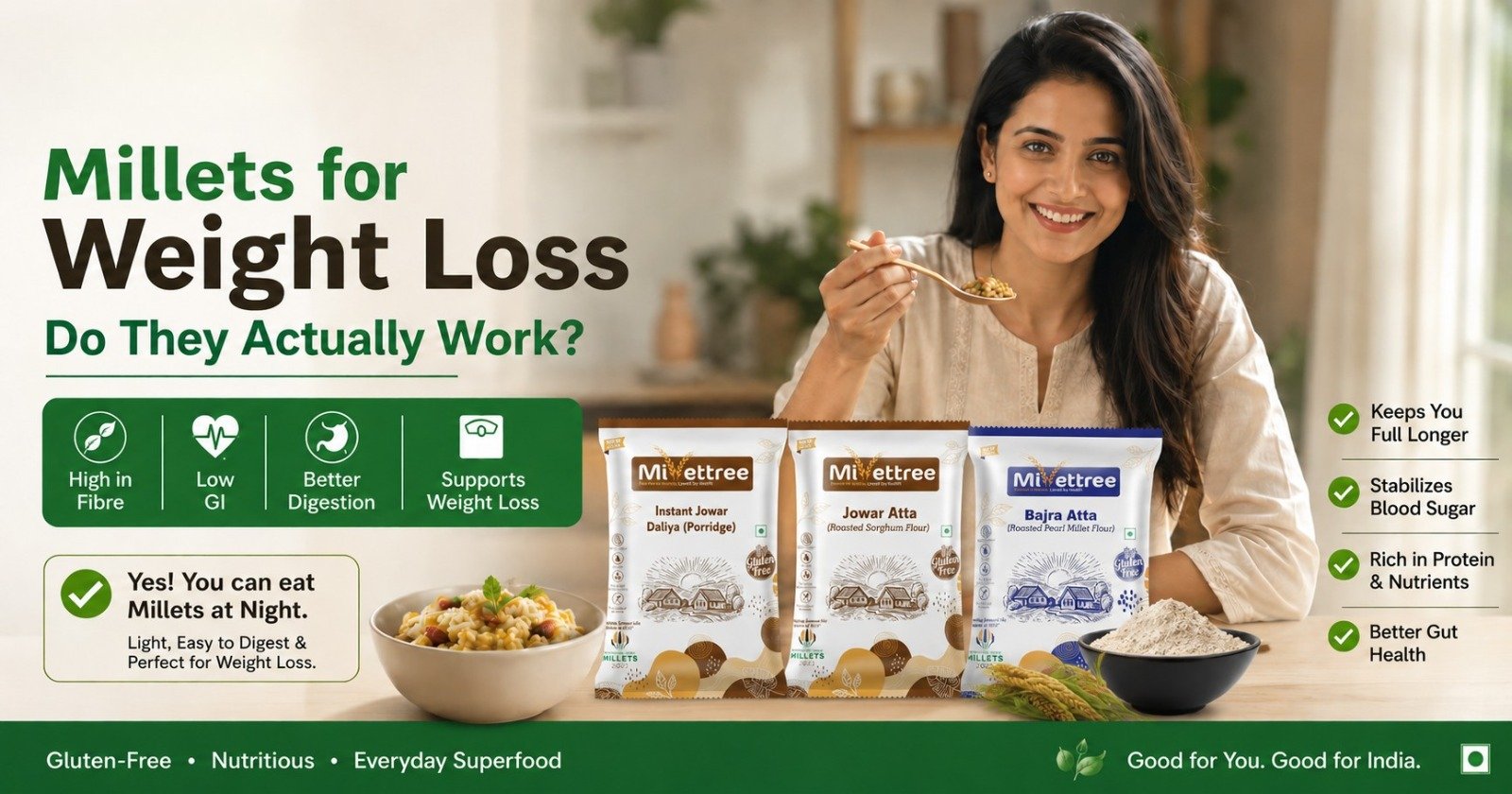
Why Millets Support Weight Loss
Millets are not low-calorie foods in the conventional sense. 100 g of ragi or bajra provides roughly 330 to 360 calories, similar to wheat. If you were to compare a bajra roti to a wheat roti purely by calorie count, you would find them broadly equivalent. The weight loss advantage of millets does not come from their calorie count alone. It comes from their composition and from what that composition does inside your body across every meal of the day.
High Dietary Fibre Keeps You Fuller for Longer
Ragi contains about 3.6 g of fibre per 100 g, and bajra contains around 8.5 g, which is among the highest fibre content of any commonly eaten grain in India. Fibre slows gastric emptying, the rate at which food leaves your stomach and enters your small intestine. This extends the period during which you feel satisfied and significantly reduces the desire to snack between meals. Multiple long-term studies consistently show that higher dietary fibre intake correlates with lower body weight, lower BMI, and reduced waist circumference across diverse populations. When you eat a bajra roti at lunch, you are not just eating lunch. You are reducing the probability of unnecessary snacking at 4 pm.
Low Glycaemic Index Prevents Insulin Spikes
High-GI foods like white bread, white rice, and sugary snacks cause rapid blood glucose spikes. The body responds to these spikes with a surge of insulin, the hormone responsible for clearing glucose from the blood. Chronically elevated insulin levels actively promote fat storage, particularly around the abdomen, and also increase hunger once blood sugar drops again after the initial spike. Millets have a low to medium glycaemic index, with ragi at around 54, bajra around 55, and jowar around 62. Glucose enters the bloodstream gradually after a millet meal, insulin remains stable, fat storage signals are reduced, and the next genuine hunger cue is delayed significantly compared to a refined grain meal of the same caloric size.
More Protein Than Refined Grains
Protein is the most satiating macronutrient. It takes more energy to digest, stays in your stomach longer, and reduces the hunger hormone ghrelin more effectively than carbohydrates or fat. Millets provide meaningfully more protein than equivalent servings of white rice, which means millet-based meals leave you more satisfied per calorie consumed. This difference is particularly significant at breakfast, where choosing a bajra roti or ragi porridge over white bread or plain rice sets a more stable hunger pattern for the entire rest of the day.
Resistant Starch and Prebiotic Benefits
Millets contain forms of starch that resist digestion in the small intestine and pass into the large intestine, where they serve as food for beneficial gut bacteria. Research over the last decade has established a clear and significant link between gut microbiome health and weight regulation. People with a more diverse and balanced gut microbiome extract fewer calories from food, have better insulin sensitivity, and experience fewer cravings for high-sugar and high-fat foods. By feeding your gut bacteria well through regular millet consumption, you are addressing weight management at a biological level that calorie counting alone cannot reach.
Best Millets for Weight Loss
Ragi (Finger Millet): The highest calcium content among millets, moderate fibre, and naturally very low fat. Ragi’s amino acid profile, particularly its tryptophan content, supports the production of serotonin, which reduces emotional eating and late-night cravings. It is also excellent for building and maintaining lean muscle mass, which raises resting metabolic rate and improves the body’s ability to burn calories even at rest.
Bajra (Pearl Millet): The highest fibre content among commonly eaten Indian millets, along with high iron and magnesium. Bajra’s dense, filling texture means you naturally consume less volume before feeling comfortably full. Its magnesium content also supports healthy insulin function, which is directly relevant to fat storage and weight management over the long term.
Jowar (Sorghum): High in both protein and fibre, and the unique antioxidant tannins found in jowar have been shown in animal studies to reduce fat absorption in the digestive tract. Jowar also has a particularly low glycaemic index among millets, making it one of the most recommended options specifically for those managing weight alongside blood sugar concerns.
Can I Eat Millets at Night?
This is one of the most frequently asked questions about millet-based diets, and it is one that deserves a clear, direct answer rather than the vague caution it often receives.
Yes, you can absolutely eat millets at night. In fact, for weight management specifically, millets are one of the best choices you can make for your evening meal. Here is why.
The concern about eating carbohydrates at night is largely based on the behaviour of high-GI refined carbohydrates. White rice or maida-based meals at dinner cause a blood glucose spike followed by an insulin surge in the evening, a time when physical activity is low and the body is preparing for rest. This insulin response in the evening promotes fat storage more aggressively than the same food consumed earlier in the day, because the body has less opportunity to burn off the resulting glucose through activity.
Millets behave entirely differently. Their low glycaemic index means glucose enters the bloodstream slowly and steadily after a millet dinner, without triggering a significant insulin spike. This means the fat storage signal that refined grains send at night is substantially reduced or absent when you eat millets instead. The fibre in millets also supports gentle, steady overnight digestion without causing bloating or discomfort.
Beyond avoiding the negative effects of refined grains at night, millets actively support the body’s overnight processes. Ragi’s tryptophan content supports serotonin and melatonin production, both of which improve sleep quality. Better sleep is itself directly linked to better weight management, because poor sleep elevates cortisol and ghrelin, the stress and hunger hormones, leading to increased appetite and cravings the following day.
The best millet choices for dinner are lighter preparations that are easy on the stomach. Ragi porridge, jowar dalia, bajra khichdi, or a cup of ragi soup are all excellent dinner options. Avoid heavy tempering or large amounts of fat as accompaniments at night, not because of the millet itself, but because the overall meal composition matters. A simple, well-seasoned bajra khichdi with a side of yogurt or a light salad is one of the most nutritionally intelligent dinners an Indian household can put on the table.
Bajra Khichdi vs Regular Rice Khichdi for Weight Loss
One of the most practical and illuminating comparisons for anyone serious about weight management is between bajra khichdi and the regular rice khichdi that most Indian households default to when they want something light, healthy, and easy to prepare.
| Nutrient (per serving) | Rice Khichdi | Bajra Khichdi |
| Glycaemic Index | High (65 to 70) | Low to Medium (50 to 55) |
| Fibre | Approximately 2 g | Approximately 5 to 6 g |
| Protein | Approximately 7 g | Approximately 10 to 11 g |
| Iron | Approximately 1.5 mg | Approximately 5 to 6 mg |
| Satiety duration | 2 to 3 hours | 4 to 5 hours |
| Post-meal insulin response | High | Moderate |
The difference in satiety duration alone is significant for weight management. A meal that keeps you comfortably full for 4 to 5 hours versus one that triggers hunger again within 2 to 3 hours directly determines how much you eat across the rest of the day. Bajra khichdi consistently outperforms rice khichdi on every parameter that matters for weight management, while being equally comforting, equally familiar in flavour profile, and equally easy to prepare. For those eating khichdi at dinner specifically, the lower glycaemic index of bajra khichdi also means a significantly better overnight hormonal environment for fat metabolism compared to rice khichdi.
A Sample Millet-Based Weight Loss Day
Breakfast: Ragi porridge made with Millettree Sprouted Ragi Flour and low-fat milk, sweetened lightly with jaggery. Ready in 8 minutes. Keeps you comfortably full until mid-morning without the energy crash that a bread or cereal breakfast produces.
Mid-morning if needed: A small handful of roasted makhana or a piece of fruit. Millets at breakfast typically reduce mid-morning hunger significantly compared to refined grain breakfasts, so this snack may not be necessary at all.
Lunch: 2 bajra or jowar rotis made with Millettree Roasted Bajra or Jowar Flour, served with a bowl of dal and a vegetable sabzi. This combination provides complementary protein, slow-releasing carbohydrates, and meaningful fibre in a format that requires no change to existing cooking habits.
Evening snack: A cup of Millettree Instant Ragi Tomato Soup, warm, filling, and only approximately 60 to 70 kcal per 200 ml serving. This is one of the most effective strategies for managing the hunger that peaks between 5 and 7 pm, the window when most snacking-related excess calorie intake happens in Indian households.
Dinner: Millettree Instant Bajra Khichdi with a side salad or a small bowl of yogurt. Light, nutritionally complete, gentle on digestion, and as the comparison above shows, meaningfully superior to rice khichdi in every way that matters for weight management.
What the Research Says
A 2018 study published in the Journal of Food Science and Technology found that participants who replaced refined grain meals with millet-based meals for 12 weeks showed significant reductions in body weight, waist circumference, and fasting blood sugar. These were not marginal improvements. The reductions were clinically meaningful and occurred without any other changes to diet or exercise habits, meaning the grain substitution alone was sufficient to drive measurable outcomes.
A 2020 systematic review examining multiple clinical trials confirmed that millet consumption is associated with improved weight management outcomes in people with metabolic syndrome, a cluster of conditions including abdominal obesity, high blood sugar, and elevated cholesterol that affects an increasing proportion of the Indian adult population.
Important Caveats
Millets support weight loss as part of a balanced diet. They are not magic, and no single food is. Cooking methods matter significantly. A ragi roti with minimal ghee is nutritionally very different from deep-fried millet snacks, and the latter will not support weight loss regardless of the grain involved. Portion size still matters even with low-GI foods, because total calorie intake across the day remains relevant. Combining millets with adequate protein through dal, legumes, paneer, or eggs, and with abundant vegetables, is essential for optimal results. Millets work best as the carbohydrate foundation of a complete, balanced meal, not as a standalone solution.
Conclusion
The case for millets in weight management is not built on marketing or trends. It is built on fibre content, glycaemic index, protein quality, gut microbiome science, and a growing body of clinical research that consistently points in the same direction. For Indian households, where switching away from carbohydrates entirely is neither practical nor culturally realistic, millets offer the most achievable and sustainable path to better weight management. Keep eating the rotis, the porridge, and the khichdi. Simply make them from the right grain.
Millets at breakfast stabilise your hunger for the entire morning. Millets at lunch reduce afternoon snacking. Millets at dinner, and yes, eating millets at dinner is not only acceptable but actively beneficial, support overnight fat metabolism without the insulin spike that refined grains produce. Every meal is an opportunity, and millets make every one of those opportunities count.
Bajra khichdi, in particular, deserves a permanent and daily place in Indian kitchens. It outperforms rice khichdi on every nutritional parameter relevant to weight management, from glycaemic index to protein to satiety duration, while requiring no fundamental change in cooking preference or eating habit. The only historical barrier has been the preparation time involved in soaking raw bajra for several hours before cooking and then pressure cooking it to the right consistency. With Millettree’s Instant Bajra Khichdi, that barrier is completely removed. There is no soaking, no pressure cooking, and no juggling of multiple raw ingredients. The same nourishing, fibre-rich, protein-complete bajra khichdi is ready in 3 minutes with just boiling water. For anyone serious about managing their weight without abandoning the foods and flavours they love, that is not a small convenience. It is the difference between a healthy intention and a healthy habit that actually sticks.
Internal Links: Fitness & Metabolism Combo | Roasted Bajra Flour | Instant Jowar Dalia