
Blog
Sprouted Ragi vs. Roasted Ragi: Which Flour Is Healthier and When to Use Each

What is Sprouted Ragi?
Sprouted ragi is made from ragi grains that have been allowed to germinate, typically for 24 to 48 hours under controlled conditions, before being carefully dried and milled into flour. This germination process is not just a processing step. It triggers deep enzymatic activity that fundamentally transforms the grain at a nutritional level, making it a meaningfully different product from regular or roasted ragi flour.
Key Benefits of Sprouted Ragi Flour
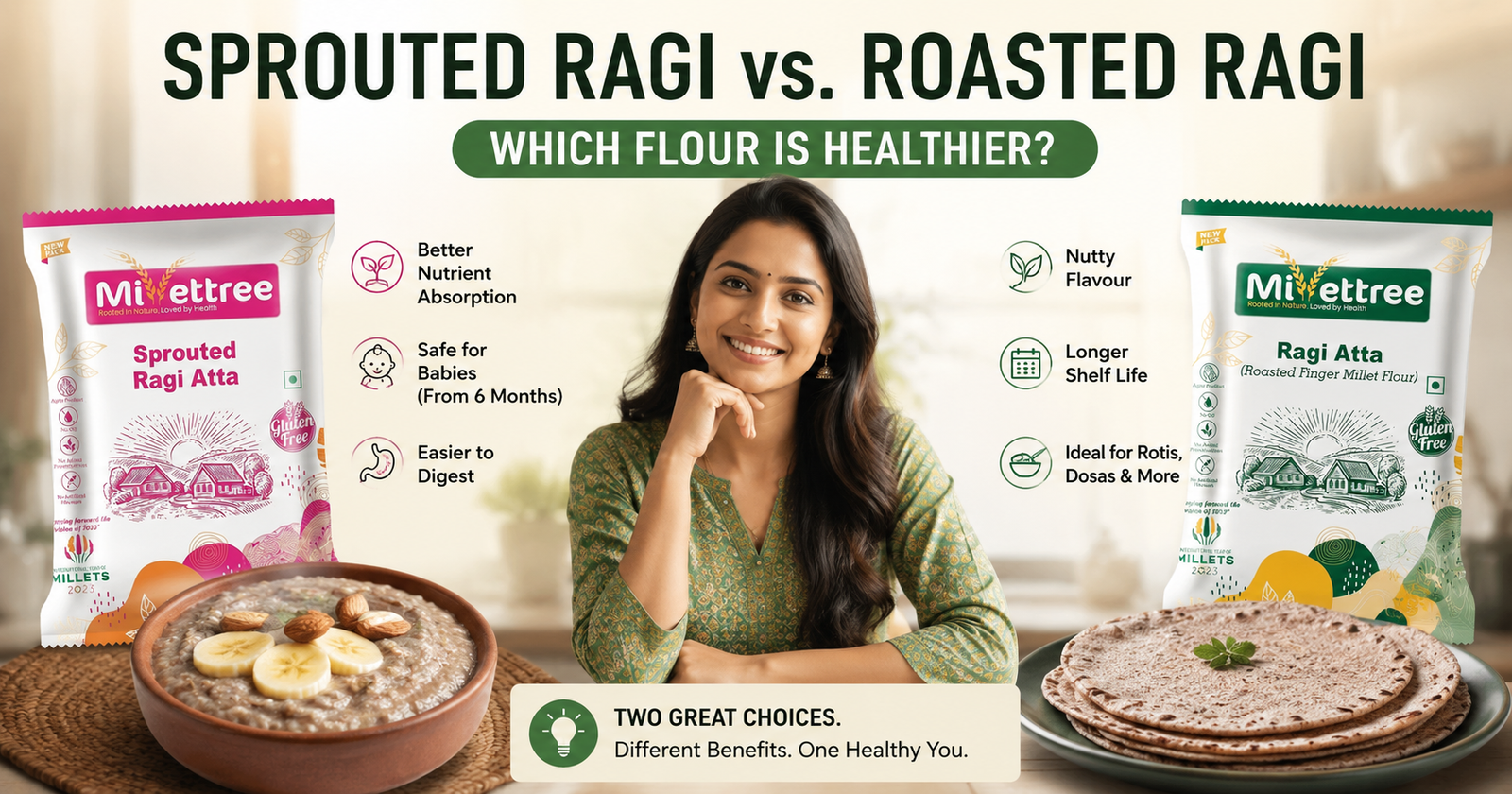
Higher bioavailability of minerals: Raw ragi, like most grains, contains phytic acid, an anti-nutrient that binds to minerals like calcium, iron, and zinc and prevents the body from absorbing them efficiently. Sprouting significantly reduces phytic acid, which means your body can absorb far more of the nutrition that is actually present in the grain. This is particularly important for ragi, which is already one of the richest plant sources of calcium available in an Indian kitchen.
Increased digestibility: The enzymes activated during germination begin breaking down complex starches into simpler carbohydrates. The result is a flour that is noticeably easier on the digestive system, gentler in the stomach, and less likely to cause bloating or heaviness. This is one of the primary reasons sprouted ragi is the preferred choice for infant feeding and for elderly individuals with slower digestion.
Naturally sweeter flavour: The enzymatic activity during sprouting converts some starches to natural sugars, giving the flour a mild, pleasant sweetness that requires little or no added sugar when used in porridge, malt drinks, or baby food. This is a meaningful advantage for reducing added sugar intake, especially in children’s diets.
Higher protein quality: Sprouting increases the free amino acid content of the grain and improves how completely the body can utilise the protein present. The result is not just more protein on paper but protein that is genuinely more useful to the body.
Best uses for sprouted ragi flour: Porridge (kanji or ambali), ragi malt drinks, baby food, pancakes, health smoothie boosters, and any preparation where a lighter texture and mild sweetness are desirable.
From What Age Can Babies Have Sprouted Ragi?
This is one of the most frequently asked questions among new parents exploring millet-based weaning foods, and the answer is reassuring. Sprouted ragi can be safely introduced from 6 months of age, making it one of the earliest and most nutritious first foods available for Indian infants.
The sprouting process is what makes this possible at such an early stage. It reduces phytic acid substantially, making the calcium and iron in ragi genuinely bioavailable rather than blocked by anti-nutrients. It also breaks down complex starches into simpler, more digestible forms that a young digestive system can handle without discomfort. The naturally mild sweetness of sprouted ragi makes it more appealing to infants who are just beginning to experience solid foods beyond breast milk or formula.
For babies aged 6 to 12 months, sprouted ragi porridge made with water or diluted breast milk is an excellent weaning food. It is gentle, highly nutritious, and provides the calcium and iron that growing infants need in abundance during this critical developmental window. From 12 months onward, sprouted ragi porridge can be prepared with full cow’s milk and sweetened lightly with a small amount of jaggery or pureed dates if desired.
Roasted ragi, while equally nutritious, is generally better introduced slightly later, from around 8 to 10 months, when the infant’s digestive system is a little more developed and better equipped to handle roasted grain flour.
What is Roasted Ragi?
Roasted ragi flour is made from ragi grains that have been carefully dry-roasted before milling. The roasting process is different from sprouting in both mechanism and outcome, and it produces a flour with its own distinct set of advantages that make it the preferred choice for most everyday cooking applications.
Key Benefits of Roasted Ragi Flour
Extended shelf life: Roasting deactivates the naturally occurring enzymes in ragi that, when left active, cause the flour to go rancid relatively quickly. This makes roasted ragi significantly more shelf-stable than raw or sprouted ragi flour. For households that keep ragi as a regular pantry staple and use it across rotis, dosas, and baking, this longer shelf life is a genuinely practical benefit.
Deeper, nuttier flavour: The roasting process develops a richer, toasty aroma through the Maillard reaction, the same chemical process responsible for the appealing flavour of toasted bread or roasted nuts. This nuttier, more complex flavour is particularly well suited to savoury preparations like rotis, dosas, and soups where a mild sweetness would be out of place.
Reduced raw grain smell: Unprocessed ragi has a distinct earthy smell that many people, especially those new to the grain, find off-putting. Roasting completely eliminates this raw smell and replaces it with a pleasant, appetising aroma that makes the flour far more welcoming to use, particularly for families transitioning away from wheat flour.
Partially reduced phytic acid: While roasting does not reduce phytic acid as dramatically as sprouting does, it does reduce anti-nutritional factors to a meaningful extent, improving the overall nutritional accessibility of the flour compared to completely raw ragi.
Best uses for roasted ragi flour: Rotis, dosas, idlis, cookies, cakes, savoury pancakes (cheelas), soups, and any preparation where a nuttier flavour and longer shelf life are desirable.
Does Roasting Destroy the Nutrients in Ragi?
This is one of the most common and completely understandable concerns among health-conscious consumers, and it deserves a clear, evidence-based answer.
The reassuring truth is that roasting at controlled temperatures does not meaningfully destroy the core nutrients that make ragi exceptional. Here is what actually happens during the roasting process and what it means for the nutritional value of the flour you use every day.
Ragi’s most celebrated nutrients, its extraordinary calcium content of approximately 344 mg per 100 g, its iron, phosphorus, magnesium, and zinc, are all minerals. Minerals are inherently heat-stable. They do not break down, denature, or evaporate during roasting the way some fragile nutrients might. When ragi is roasted at appropriate temperatures, these minerals remain fully intact in the flour. The calcium in your roasted ragi roti is the same calcium that was in the grain before it was roasted.
Dietary fibre, another of ragi’s most important contributions to health, is similarly unaffected by the roasting process. The structural carbohydrates that make up ragi’s fibre content remain intact and continue to perform their function of slowing digestion, feeding gut bacteria, and promoting satiety.
What roasting does affect slightly is a small subset of heat-sensitive micronutrients, particularly certain B vitamins like thiamine and folate, which can degrade at high temperatures. However, this reduction is marginal when roasting is done at controlled temperatures, and it needs to be weighed honestly against everything the roasting process adds: dramatically improved shelf life, significantly better flavour, elimination of raw grain smell, and a more versatile flour that is easier to incorporate into daily cooking.
The practical reality is this: a household that buys roasted ragi flour and actually uses it every day in rotis, dosas, and soups is consuming far more ragi nutrition than a household that buys raw ragi flour, finds the smell or taste off-putting, and uses it infrequently. Consistency of consumption matters more than marginal differences in processing. Roasted ragi used daily is nutritionally far superior to raw ragi used reluctantly.
Side-by-Side Comparison
| Feature | Sprouted Ragi | Roasted Ragi |
| Mineral bioavailability | Higher (phytic acid significantly reduced) | Moderate |
| Digestibility | Easier to digest | Good |
| Flavour | Mildly sweet | Nutty, rich |
| Shelf life | Moderate | Longer |
| Best for | Porridge, baby food, malts | Rotis, dosas, baking |
| Protein quality | Higher | Good |
| Suitable from age | 6 months onward | 8 to 10 months onward |
| Core minerals (Ca, Fe, Mg) | Fully intact | Fully intact |
| Phytic acid reduction | Significant | Partial |
Which Atta Should You Buy?
This is the question that matters most, and the honest answer depends entirely on how you plan to use it and who you are buying it for.
Buy sprouted ragi atta if your primary use is porridge, malt drinks, or baby food. It is the right choice if you have an infant from 6 months old who needs a highly digestible, nutrient-bioavailable first food. It is also the better option for pregnant or breastfeeding women who need maximum calcium and iron absorption, for elderly family members with slower digestion, and for anyone managing iron or calcium deficiency where absorption efficiency matters as much as intake quantity.
Buy roasted ragi atta if you primarily want to use ragi for rotis, dosas, idlis, cheelas, baking, or soups. It is the more practical everyday choice for most Indian households, with its longer shelf life, better flavour for savoury applications, and familiar cooking behaviour. If you are new to ragi and want to start incorporating it into your meals without disrupting your existing cooking habits, roasted ragi is the more forgiving starting point.
The most complete approach, and one that many nutritionally informed households are beginning to adopt, is to keep both in your kitchen. Sprouted ragi for morning porridge, children’s food, and malt drinks. Roasted ragi for rotis, dosas, and savoury cooking. Between the two, you have every application covered, and you are using ragi at its full nutritional potential across your entire day.
Conclusion
Sprouted and roasted ragi are not competing products. They are two complementary expressions of the same exceptional grain, each optimised for a different purpose. Sprouted ragi delivers superior mineral absorption, gentler digestion, and suitability for infants from 6 months of age, making it the most nutritionally intensive option for those who need it most. Roasted ragi preserves all of ragi’s core minerals and fibre completely intact while delivering better flavour, longer shelf life, and greater versatility for everyday savoury cooking. The concern about roasting destroying nutrients is understandable but largely unfounded when roasting is done correctly: the minerals and fibre that define ragi’s nutritional identity survive the process fully. What you choose ultimately depends on your household’s needs, but understanding both options means you are no longer guessing. You are making a genuinely informed decision about one of the most powerful flours available in an Indian kitchen today.
Internal Links: Sprouted Ragi Atta | Roasted Ragi Atta | Brain & Growth Combo