

What Are the Differences Between Sprouted Ragi and Normal Ragi?
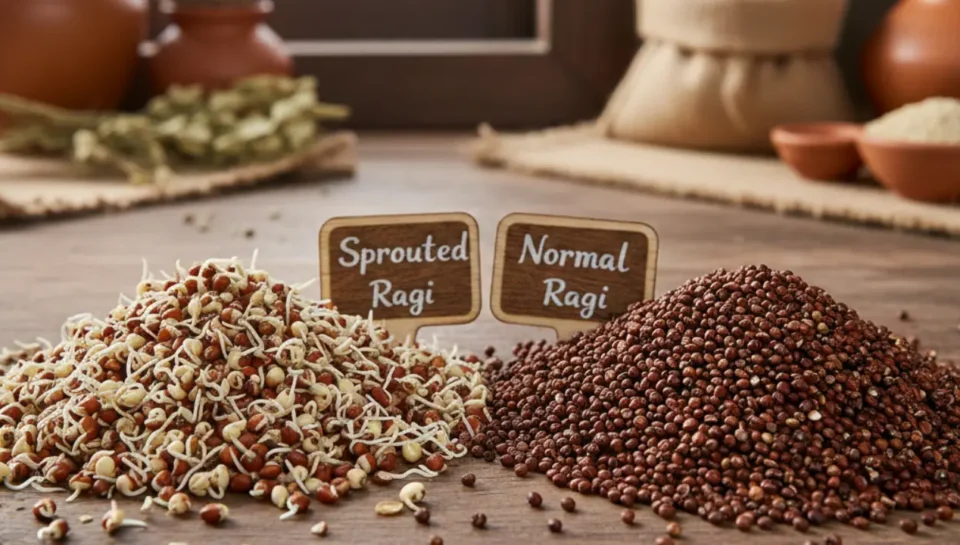
Ragi has been used in our diet since many years. It is a type of millet that has been used in our diet because of its richness in nutritional values. Sprouted ragi, which was used by our grandmothers, has been in the attention recently. Sprouted ragi has been advised by many nutritionists to be much better than regular ragi. Let’s look to know the differences between sprouted ragi and normal ragi.
What is Normal Ragi?
Normal ragi flour is made by drying the grain. The ragi grains are cleaned, dried, and ground into a flour. It has all the nutritional values of the grain. Ragi, by its nature, has plenty of calcium, iron, fiber, and protein. Further, the GI indexes are also low. This indicates that it can be very helpful for people suffering from blood sugar or diabetes. Normal ragi flour can be easily used for several recipes. You can prepare a paste, dosa, or chapati from ragi. Sometimes, people have difficulties digesting ragi. This requirement is fulfilled by sprouted ragi.
What is Sprouted Ragi?
Sprouted ragi begins as whole ragi grains. The whole ragi is soaked in water for some time. Later, the whole ragi is left damp so that small shoots are developed. Sprouting triggers natural enzymes found in whole ragi. Sprouted ragi is dried and converted into flour. Sprouted ragi flour look like normal ragi flour. But its nutritional values are different and higher than normal ragi flour.
Digestibility and Nutrient Absorption
Sprouting helps in the digestion of complex nutrients. It is therefore easy to digest sprouted ragi. In regular ragi, some of its nutrients are bound, making them difficult to absorb. Sprouting these nutrients makes them easily absorbed. This is because such persons can now easily avail themselves of these nutrients. Sprouted ragi may be easy on people with sensitive digestion.
- Protein and Mineral Benefits
Normal and sprouted ragi are nutritious. However, sprouted ragi may provide even better value as a nutrient source. This is particularly true about mineral content such as calcium and iron. They are very necessary to the body as they provide power and support bone strength. The levels of protein are also higher.
- Effect on Blood Sugar
Normal ragi has a low glycemic index. This is why it is so effective in controlling the sugar level that is released into the blood. Sprouted ragi would be even better. This is because it would have a lower glycemic index.
- Taste and Cooking Uses
Ragi flour has an earthy aroma. And sprouted ragi has stronger aroma than ragi flour. You can use both flours to make different recipes. Sprouted ragi can be mixed along with other flours to give it a better texture. It can also be used to make pancakes, porridge, rotis, and cake.
Which One Should You Choose?
Sprouted ragi and normal ragi both are healthy and nutritious. But if you have some digestive issues, it is better to go for the sprouted ragi. As a recipe item, you can also choose to use the regular ragi.
Conclusion:
The only variation in sprouted ragi is in the processing of the grains. Sprouted ragi has better assimilation of the food. Common ragi retains its nutrient values. A primary concern with ragi is that it has too many fibers.
